By Jadon Haynes
The world George R.R. Martin built and handcrafted, titled A Song of Ice and Fire, has sparked numerous discussions and offered many perspectives on real-world issues involving race, sexuality, religion, gender, class, and disability. To delve deep into how these topics were approached would take longer than the seven books themselves. What this essay will do instead is analyze the rich and complex issues of class and disability within the show Game of Thrones, created by George R.R. Martin, David Benioff, and D.B. Weiss.
Game of Thrones is a multi-layered political drama that’s set in the fictional medieval country of Westeros. As early as the first episode, we were introduced to our main character, Ned Stark, who is the lord of Winterfell and the Warden of the North, meaning that anything in the northern region of Westeros is controlled and overseen by him. We even see Ned use his power to order the death of a man who had fled the Night’s Watch, a significant rule under Westeros’s laws. He is what’s considered highborn. In modern terms, Ned would be an upper-class citizen. In Westeros, highborn people receive proper training, education, and better opportunities than those born into lower social classes.
Class is a central component in how one is treated in Westeros. Ned’s son Jon Snow is an excellent example of this. The name Snow is given to one who is born of adultery in the North. With this in mind, Ned’s wife, Catelyn Stark, treated Jon terribly growing up, not allowing him to attend family dinners and making him believe that participating in formal gatherings would dishonor his family. Catelyn had no reason to hate Jon, as Jon was just a boy trying to make his father proud. Catlyn hated Jon for no particular reason, but that has last name was Snow.

The King of Westeros, Robert Baratheon, would arrive at Winterfell, and, of course, he was treated as such. Ned hosted a feast in his name as they celebrated the good times they had before politics became an integral part of their day-to-day. Robert would then ask Ned to be his hand, the title of the Westerosi vice president, after the previous hand, Jon Arryn, died of unknown causes. Ned reluctantly agreed to become his hand, and Robert commanded that his son, Joffrey Baratheon, would marry Ned’s daughter, Sansa Stark. Robert had a commanding voice, not asking Ned about the betrothal, but instead telling him that it was going to happen whether he liked it or not. Robert showed the class difference here. It’s one thing to be a highborn lord; it’s another to be a king of an entire country.
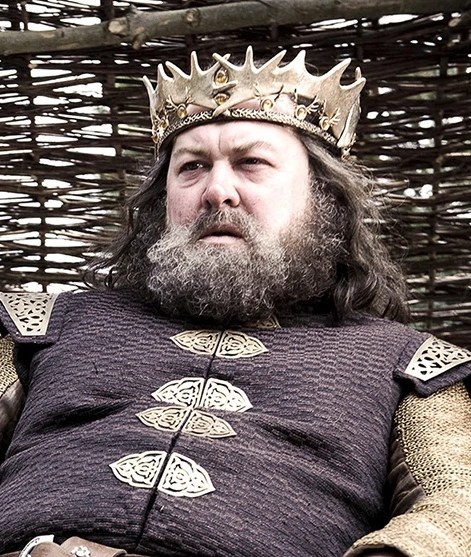
After a few episodes, we are in the capital city of King’s Landing, and we find out that Robert had been killed in a drunken fight with a boar, causing his son Joffrey to inherit the throne. We had learned in prior episodes that Joffrey wasn’t the “handsome prince” that Sansa had thought initially (Stark, 2011, 0:40:17). Instead, Joffrey was a cruel, sadistic child who took great pleasure in killing cats and showing them to his adolescent brother. Joffrey here’s whispers from the townspeople that he may secretly be a child of incest, making him a bastard and not fit for the throne, so before these rumors gain legs, he orders the death of every adulterated child of his father, Robert Baratheon. In King’s Landing, we get to meet a new cast of characters, including one who showcases the lower-class side of Westeros. His name is Gendry. We later find out that Gendry is one of Robert’s kids from a woman Robert bedded in a brothel.
The lower-class side of King’s Landing is called Flea Bottom. Where all the feces and trash go to rot. The people of Flea Bottom grow hungry. Once they grow hungry, they grow angry, going as far as to resort to cannibalism to survive the evening. Thieves thrive in the lower class because no one cares if a lower-class piece of bread goes missing. When a character named Braun became commander of the city watch, his first order of business was to kill all of the thieves because he understood the atrocities they would commit once the city was at war. Flea Bottom is notorious for the terrible smell and the cannibalism. However, George R.R. Martin’s depiction of class through Gendry’s perspective paints an entirely different picture. A picture of an upper class that doesn’t even see the lower class as people. An upper class that would rather feed the dogs than the people of its own city.
There was one highborn upper-class man who had sympathy and empathy for these people. A man who was quoted to say, “ I have a tender spot in my heart for cripples, bastards, and broken things (Lannister, 2011, 0:06:27).” Tyrion Lannister has dwarfism, and George R.R. Martin handles disability exceptionally well. He doesn’t sugarcoat or turn the story into a sob story on dwarfism. Martin instead depicts Tyrion Lannister as a realist. Tyrion knows his limitations. He proudly calls himself a dwarf, since he understands the world will not coddle him. Tyrion reads, claiming that “his mind needs books like a sword needs a whetstone (Lannister, 2011, 0:29:04).” He remembers those who make fun of him and has a low tolerance for bullies who make fun of other dwarves as well. Season 4 episode 2 is an example of this. In this episode, King Joffrey made dwarves tell him a “comedic” retelling of the entire Game of Thrones story. Mocking not only the characters the play is supposed to be portraying, but mocking the dwarves as well. Tyrion didn’t find this play amusing, offering each of the dwarves a healthy sum of money for their performance.
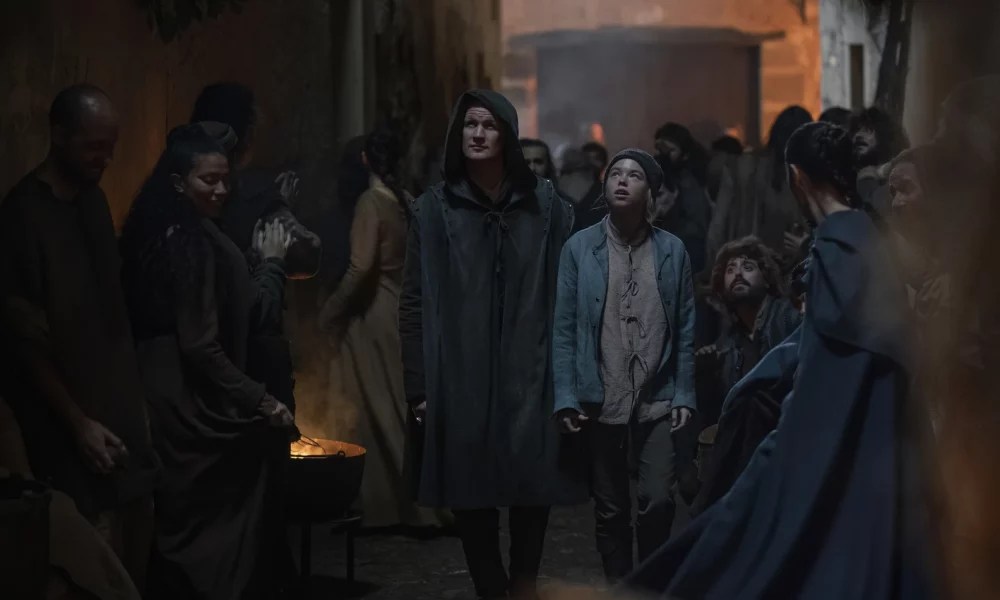
Tyrion is the example used in the show, highlighting how horribly people with disabilities are treated in the country of Westeros. Being called the imp, half-man, or a grotesque monster. His horrible treatment went as far as his own family sexually assaulting women in front of him and forcing him to go last, committing the same heinous act. As early as the first episode, Tyrion notes that if he weren’t highborn, “he would be left out in the woods to die, or sold to some grotesquerie,” which is the equivalent of a freak show in Westeros (Lannister, 2011, 0:28:19).
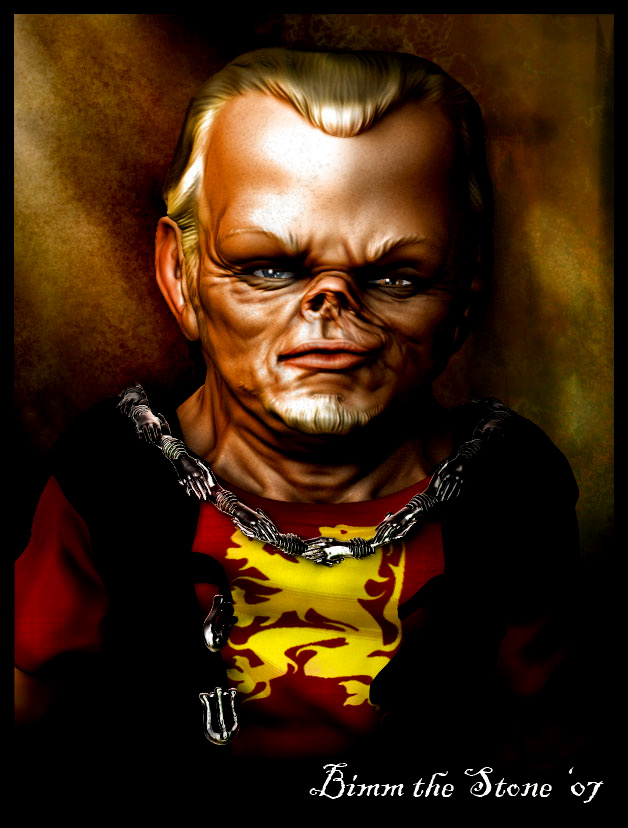
When watching Game of Thrones, you may leave the show with the lesson that, despite your circumstances, no matter how challenging, you can still reach heights you couldn’t have previously imagined. As Varys said to Tyrion, “a very small man can cast a very large shadow(Varys, 2012, 0:43:45).”
Reference List
Martin, G. R. (1996). A Song of Ice and Fire. George R.R. Martin.
HBO Entertainment ; co-executive producers, George R.R. Martin, Vince Gerardis, Ralph Vicinanza, Guymon Casady, Carolyn Strauss ; producers, Mark Huffam, Frank Doelger ; executive producers David Benioff, D.B. Weiss ; created by David Benioff & D.B. Weiss ; Television 360 ; Grok! Television ; Generator Entertainment ; Bighead Littlehead. (2012). Game of thrones. The complete first season. New York :HBO Home Entertainment,
 Jadon Haynes
Leave a comment